DO NOT EVER SUBMIT YOUR INFO TO WEBSITES LIKE THAT!
What you just witnessed was a total scam! Scammers utilize scare tactics with great success every day. The previous page is a recreation of real scam websites that use flashing colors, urgent wording/false threats, and loud sounds to create a sense of urgency and panic in users that encounter them, namely their targets are users that don’t know much about how computers work. This kind of phishing is not only seen in this website form but most infamously done via phone calls, where a scammer on the other end will claim that their target must hand over information to prevent some kind of disaster.
Scammers use virtually every available format they can to try to steal your passwords, account numbers, or Social Security numbers. Phishing scams often tell a story to trick you into clicking on a link or downloading something. It may appear to be from a company or bank you trust. They may tell you they’ve noticed some suspicious log-in attempts (they have not), claim there’s a problem with your account or your payment information (there is not), say you need to confirm some personal or sensitive information (you do not), include an invoice you don’t recognize (it’s fake), say you’re eligible for a government refund (it’s a scam), offer a coupon, prompt you to click on a link, etcetera.
Examples of phishing scams
The previous page is a flashier demonstration of more infamous scams to catch your attention, but most of the time scammers want to seem innocuous instead of scary.
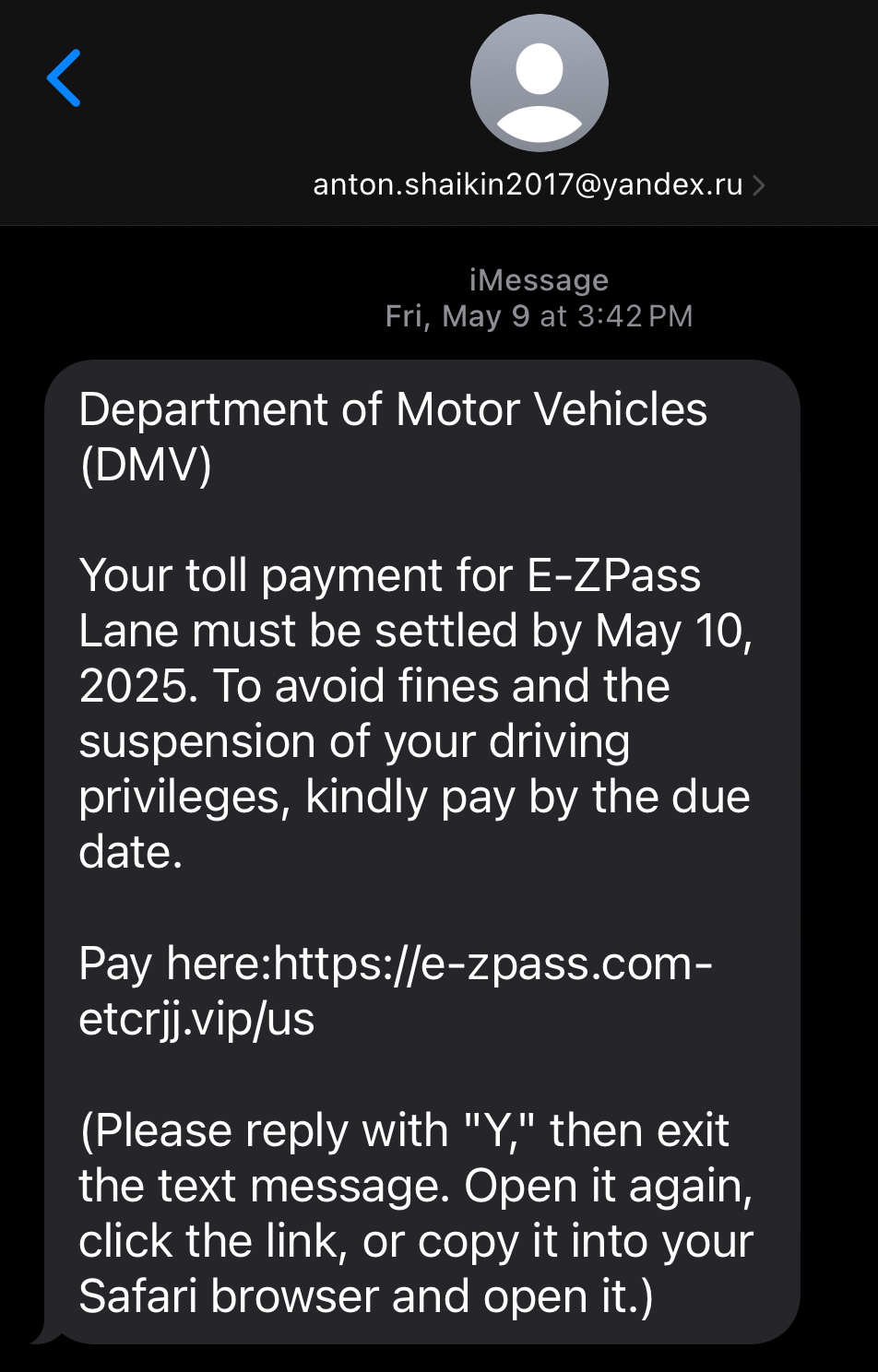
This is a real example that I received on my phone. Let’s look at some ways you can instantly tell this is fake.
Pay attention to the links: The only domain for official US government websites are .gov. This link is leading us to a “.vip”.
Look at who is sending it: “anton.shaikin2017 yandex.ru” is NOT the DMV. In fact the .ru domain is intended for Russians.
Extremely short deadline: Notice how the message was received May 9th and the deadline for this “toll payment” is May 10th. It is a common theme for scammers that they want you to pay IMMEDIATELY.
Use common sense: The DMV is not going to contact you about a toll payment this way. At the time of receiving this message, I didn’t go through any tolls.
Last but not least, don’t reply to messages like this no matter what. Even if you just want to mess with them, it’s not going to phase them and they’ll know from now on that you’re likely to respond.
Protecting yourself against phishing
NEVER SHARE SENSITIVE INFORMATION: Your financial institution, Microsoft, Amazon, NO REPUTABLE COMPANY will EVER ask you to withdraw cash, provide passwords, or ANY sensitive information. Anyone telling you to do this has an ulterior motive.
BE SKEPTICAL OF URGENCY: Scams will typically try to convince you that there is an imminent deadline of some kind, like on the previous page.
PLEASE USE COMMON SENSE: Ask yourself, does it sound too good to be true?
Further reading
Federal Trade Commission: How to Recognize and Avoid Phishing Scams
Office of the Comptroller of the Currency: Phishing Attack Prevention
Official Microsoft support: Protecting yourself from phishing